
Air Fryer vs Deep Fryer: Which One Fits Your Kitchen? 1
What if the better fryer is simply the one that suits the meals you make most? The air fryer vs deep fryer choice can sound like a contest between healthy and unhealthy, but that misses what matters day to day: taste, texture, oil use, cleanup, and cooking habits.
Air frying usually uses less added oil than deep frying, but the ingredients and cooking method still matter, and the two appliances do not produce identical results. If you’re weighing crispy snacks against a simpler cooking routine, compare what each appliance does instead of relying on broad claims.
This guide explains how air fryers and deep fryers work, which foods tend to suit each method, and what to consider before choosing one for your kitchen. You’ll also see how oil handling, cleanup, and versatility can shape your decision. Majendo UG Appliances offers the ADH 6L Digital Air Fryer and the ADH 3 Litres Deep Fryer as options to compare.
Key Takeaways
- The air fryer vs deep fryer decision comes down to cooking method, preferred texture, and the meals you make most.
- Oil contact and food type affect crispness and cooking results.
- Compare everyday trade-offs, including oil use and cleanup, before choosing.
- Match an appliance to your cooking routine rather than assuming one is right for every kitchen.
- Compare Majendo’s ADH 6L Digital Air Fryer | AEF-401 and ADH 3 Litres Deep Fryer to see which method suits you.
Air Fryer vs Deep Fryer: What Is the Difference?
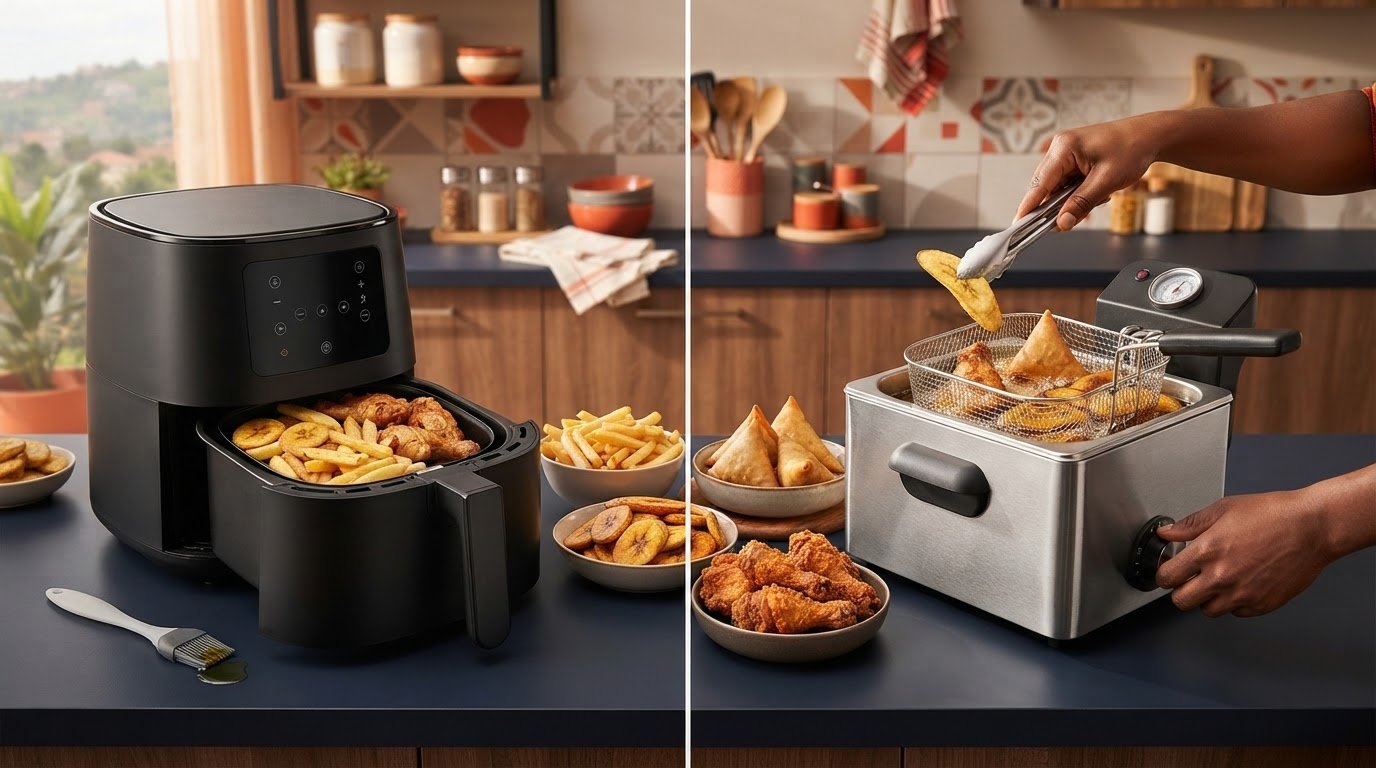
An air fryer cooks by circulating heated air around food in a cooking chamber. A deep fryer cooks food submerged in heated oil. Air frying may use little or no added oil, depending on the recipe, while deep frying relies on oil surrounding the food. Because heat reaches the food differently, the two methods can produce different textures and levels of browning.
An air fryer surrounds food with circulating hot air; a deep fryer surrounds it with hot oil.
That is the central difference in the air fryer vs deep fryer comparison. An air fryer is a countertop convection appliance, and its cooking process is related to the circulation of hot air described in the Air fryer Wikipedia overview. It is not identical to conventional deep frying, and neither appliance guarantees the same result for every ingredient or recipe.
How does an air fryer cook food?
A heating element warms the air, and a fan moves it around food in a compact cooking chamber. The circulating air transfers heat to exposed surfaces. A light coating of oil can help some foods brown and develop a crisp surface, though the amount and effect depend on the recipe. Leave space around food where possible: pieces packed into a crowded layer may cook less evenly.
How does a deep fryer cook food?
A deep fryer heats cooking oil, then cooks food while it is submerged. The hot oil transfers heat across the food’s surface, helping create the familiar fried finish. The result still depends on preparation and technique. Wet surfaces, uneven pieces, oil temperature, and cooking time can all affect browning and texture, so immersion alone does not ensure an even result.
Think of the cooking method as a starting point, not a promise about the plate. Thick potato pieces may brown differently from thin chips. A moist coating or uneven pieces can also change how heat reaches the surface. Preparation matters with either appliance.
- Air frying: Hot air reaches exposed surfaces, and a little oil may support browning.
- Deep frying: Heated oil contacts the food all around while it cooks.
- Both methods: Food size, moisture, preparation, and cooking time influence the result.
For a fair comparison, prepare the same food in similar-sized pieces, then judge the texture and finish you prefer. Air frying can brown food, but it is not a direct copy of deep frying. The difference in heat transfer is why you may need to adjust recipes and expectations for each appliance.
Air Fryer vs Deep Fryer: How Do Taste, Texture, and Cooking Results Compare?
The air fryer vs deep fryer comparison depends on the food and the finish you want. Deep-fried food often has a distinct oil-fried taste and crisp coating, while air-fried food can brown and crisp on exposed surfaces with less added oil. Results vary with moisture, piece size, preparation, and cooking conditions.
| Factor | Air fryer | Deep fryer |
|---|---|---|
| Browning | Can brown exposed surfaces; results vary with spacing and oil coating. | Oil surrounds food, helping create a fried finish. |
| Texture | May be crisp outside, with a texture that differs from deep-fried food. | Often gives a familiar crisp coating, depending on the food and method. |
| Oil contact | Usually little or no added oil, depending on the recipe. | Food cooks submerged in heated oil. |
| Batch handling | Food needs room for air to circulate; crowded batches may cook unevenly. | Food needs room in the oil, and larger batches may affect cooking conditions. |
| Cleanup | Typically involves cleaning the cooking parts and removing crumbs or residue. | Includes cleaning the appliance and handling used cooking oil. |
Which fryer makes the crispier result?
Either method can produce crisp food, but texture depends on the ingredient and preparation. Fries that are wet or piled too closely may brown unevenly in an air fryer. Cut size and cooking conditions matter in hot oil, too. Fries alone can’t predict how every dish will taste or crisp, because each food brings its own moisture, shape, and coating.
For a useful comparison, keep the cut size and seasoning similar, avoid overcrowding, and follow a recipe suited to the appliance. A light oil coating may help air-fried ingredients brown, while a coating or batter can change how food cooks with either method. Judge the result by the foods you regularly make, not by one test alone.
How do cooking time and cleanup differ?
Consider the whole routine: preparing food, heating the appliance, cooking in batches, and cleaning afterward. Preheating, batch size, and recipe can change total cooking time, so neither fryer is always faster. Air-fryer cleanup often means washing removable cooking parts; deep-fryer cleanup also involves allowing oil to cool and handling it for storage or disposal. Follow the appliance instructions for care.
Cleanup preferences can matter as much as taste. If you’d rather avoid managing used oil, that may weigh in favour of air frying. If you regularly prefer the familiar oil-fried finish, the extra oil handling may feel worthwhile. For a direct comparison, explore Majendo’s air fryer and deep fryer options.
Air Fryer vs Deep Fryer: Which Is Healthier and What Are the Trade-Offs?
Air frying generally uses less added oil than deep frying, which can make it a practical choice if reducing oil in cooking is a priority. But using less oil does not automatically make a whole meal healthy, and deep-fried food is only one factor that shapes nutrition. Ingredients, portion size, side dishes, and how often a food features in meals all count.
Does using less oil make air-fried food healthier?
It can reduce the oil added during cooking, but that is a limited claim, not a promise of a particular health outcome. For example, air-frying a heavily coated or oversized portion does not change the ingredients or serving size. The World Health Organization’s healthy diet guidance focuses on the overall pattern of eating, including balance and variety, rather than one appliance or cooking method.
For a useful comparison, look at the whole plate. Consider what the food is made from, how much you plan to eat, and what else makes up the meal. Switching from deep frying to air frying may reduce added oil, but it cannot by itself determine the nutritional value of the ingredients or the meal as served.
What trade-offs come with deep frying?
Deep frying requires cooking oil that needs to be added, cooled safely after use, and handled for storage or disposal. That is an extra part of the routine, alongside cleaning the fryer and any utensils that come into contact with oil. Follow the appliance’s care instructions and avoid handling hot oil until it has cooled.
For some dishes, the appeal is the characteristic oil-fried texture and flavour. That can be a worthwhile cooking preference, but it is not a nutritional advantage in itself. The practical trade-off is that the result you enjoy comes with oil use and oil management. Air frying reduces the need for added cooking oil in many recipes, but may not deliver the same finish.
Match the method to your household habits, not to a blanket healthy-or-unhealthy label. Consider:
- Oil preference: Choose air frying if using less added oil is a priority; account for oil handling if you deep fry.
- Meal choices: Think about ingredients, portions, and side dishes, not just the appliance.
- Cooking routine: Weigh the deep-fried texture you enjoy against the extra steps of managing cooking oil.
The air fryer vs deep fryer decision is best grounded in these everyday trade-offs. Either appliance can fit into a varied eating routine. Focus on the foods you make, the portions you serve, and the cooking process you’re comfortable repeating.
How to Choose Between an Air Fryer and Deep Fryer for Your Routine
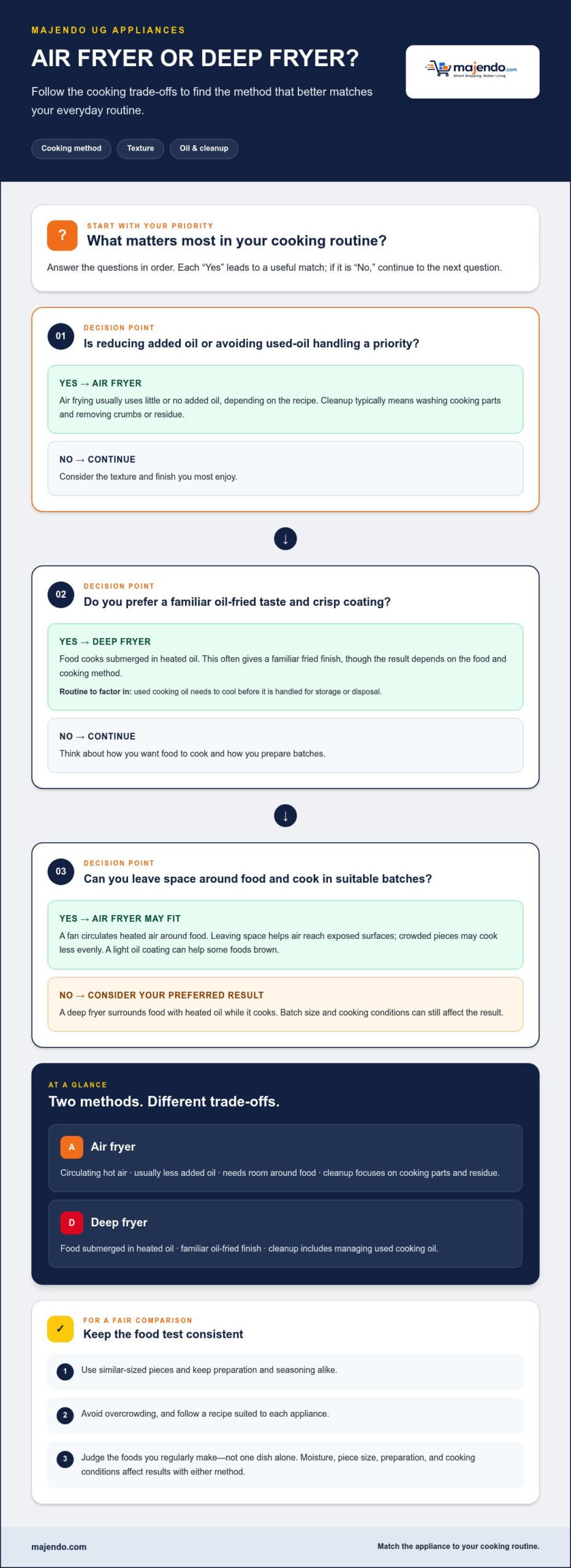
Choose by considering the meals you make often, the finish you prefer, and the steps you’re willing to handle. A fryer suited to an occasional snack may not fit regular family meals or limited counter space. Use this process to narrow your choice without treating either appliance as the right answer for every kitchen.
- Start with your usual foods. List the dishes you would make most often. Consider whether the recipes suit circulating hot air or whether you prefer food cooked in oil.
- Choose the texture you want. If you value the characteristic finish of oil-fried food, a deep fryer may suit you. If you’re comfortable with a different result and want to use less added oil in many recipes, consider an air fryer.
- Think through oil and cleanup. Decide whether you’re happy to manage cooking oil after use, including cooling, storage, and disposal. Also consider which appliance’s cooking parts will be easier to clean in your routine.
- Plan for portions and space. Think about how much food you cook at once, whether you’re willing to work in batches, and where the appliance will sit or be stored. Frequent use may make a permanent counter spot more practical.
When is an air fryer the practical choice?
An air fryer may suit a routine that favours less added oil and flexible everyday cooking. Depending on the recipe, you might use it for vegetables, reheating a snack, or preparing chips. Check the recipe and consider how much food you usually cook, since crowding can affect results and multiple batches take planning.
Counter space matters, too. If the appliance will stay out, make sure it fits the spot you have in mind. If you plan to store it between uses, consider how easy it will be to move and put away. The best fit is one you’ll use regularly, not simply one with features you rarely need.
When does a deep fryer make more sense?
A deep fryer may suit households that regularly prefer the taste and texture of food cooked in hot oil. It can be a practical match if that finish is worth the additional oil handling and cleanup in your routine. Consider where you’ll use and store the appliance, and whether you’re comfortable managing oil between cooking sessions.
Neither method is necessary for a particular dish, and your choice can depend on the recipe, portion size, and personal preference. Compare the product details shown for each option rather than relying on a general price comparison. To explore fryer options for your kitchen, view Majendo’s air fryer and deep fryer options.
Explore Majendo’s Air Fryer and Deep Fryer Options
Once you’ve decided which cooking method better suits your meals, compare the relevant options by category and stated capacity. Majendo UG Appliances’ catalogue includes an air fryer and a deep fryer, giving you a direct starting point for matching an appliance to your preferred cooking routine. The listed names and capacities help identify the options, but they do not determine which will suit your kitchen best.
Compare the listed air fryer and deep fryer
The ADH 6L Digital Air Fryer | AEF-401 is the air fryer option. The ADH 3 Litres Deep Fryer is the deep fryer option. Their stated capacities differ, but capacity alone does not tell you how much food you’ll prepare comfortably in a batch. Your ingredients, recipes, and preferred serving sizes matter too.
Use the difference between air frying and deep frying to guide your comparison. If you want to cook with circulating hot air and use little or no added oil in some recipes, start with the air fryer listing. If you prefer food cooked immersed in hot oil and are comfortable managing that oil, consider the deep fryer listing. These are ways to narrow your choice, not promises about specific cooking results.
Picture a normal week in your kitchen. Which appliance’s cooking method would you use more often? How much food do you usually prepare at once? Where would the appliance fit when in use or stored? These practical questions can help you weigh the options without assuming the larger stated capacity is a better match for every household.
Take the next step with Majendo UG Appliances
Keep your routine in view as you explore the listings. The air fryer vs deep fryer choice is about matching a cooking method to your preferred foods, oil use, and everyday habits. Compare the product details and stated capacities with your usual portions and available kitchen space.
Majendo UG Appliances advertises free delivery, secure payment, and 365 days for free returns. These shopping details can help you assess the purchase alongside the appliance type that fits your cooking routine.
Ready to compare the two listed fryer types? Explore Majendo UG Appliances’ fryer options and choose the cooking method that fits the way you prepare meals.
Make the Choice That Fits Your Everyday Cooking
Before choosing, picture a meal you make often and the steps you want around it, from preparation to serving and cleanup. That simple check can make the air fryer vs deep fryer decision feel less abstract. You’re choosing a method you’ll be comfortable using as part of your routine, not a label for your kitchen.
Think about which cooking result you enjoy, how much counter space you can set aside, and how often you expect to use the appliance. Then compare the relevant product details with those needs in mind. A thoughtful match is more useful than a broad claim about which fryer is best for everyone.
Majendo’s fryer options give you a practical place to continue that comparison. The site advertises free delivery, secure payment, 365 days for free returns, and genuine products from verified official brand stores.
To compare the listed options, explore Majendo’s fryer options and choose a cooking method that fits your kitchen routine.
Frequently Asked Questions
Can you cook frozen chips in an air fryer?
Yes, frozen chips can be cooked in an air fryer. Follow the packet or appliance instructions, and spread the chips in a loose layer so hot air can reach them. If you’re cooking more than fits comfortably, work in batches rather than packing the basket tightly. Check them as they cook and adjust the cooking time to suit their thickness and the finish you prefer.
Do you need to preheat an air fryer?
Not always. Preheating depends on the appliance instructions and the recipe. Some recipes include it to help cooking begin at a consistent temperature; others allow food to go straight into the basket. If you skip preheating, the food may need a different cooking time than the recipe gives. For your first attempt, follow the recipe closely, then adjust based on how your appliance cooks.
Can an air fryer cook food without any oil?
Yes, you can cook some foods without adding oil, but the result depends on the ingredient and recipe. Frozen foods may already contain oil, while lean or naturally dry ingredients can turn out less browned or more dry without it. If a recipe calls for a light coating, use the amount it suggests rather than assuming oil-free cooking will give the same taste and texture.
Can an air fryer replace a deep fryer completely?
Not for every cook or recipe. An air fryer can handle many foods, but it won’t reproduce the exact result of food submerged in hot oil. The air fryer vs deep fryer choice depends on how much you value that distinct fried texture and whether you’re happy to adapt recipes. If you often want both kinds of results, one appliance may not meet every preference.
How should used deep-frying oil be handled?
Let used oil cool completely before handling it. If you plan to reuse it, strain out food particles and store it in a clean, sealed container according to the fryer’s instructions. If you’re disposing of it, follow local waste guidance. Don’t pour cooking oil down a sink or drain, where it can cause blockages. Keep hot oil away from children and pets while it cools.
Can you use an air fryer for foods other than chips?
Yes. Depending on the appliance and recipe, you can try foods such as vegetable pieces, chicken portions, fish, or pastry snacks. Use guidance written for air frying, since cooking times and preparation can differ from oven or deep-fryer recipes. Leave space around pieces where possible, and check that food is cooked as intended before serving. A little experimentation helps you learn which recipes suit your routine.











One Comment
Trackbacks and Pingbacks
[…] use the appliance as directed, and plan where it will be stored. For context on comparisons with deep frying, the British Heart Foundation discusses whether air fryers are a healthier cooking option; cooking […]